Kena Upanishad (Kenopanishad) Teachings Day 1, Session 3
Video by Yes Vedanta
- Channel
- Yes Vedanta
- Type
- Video
- Published
- 8 Sept 2024
- Language
- English
- Categories
- Mind
About
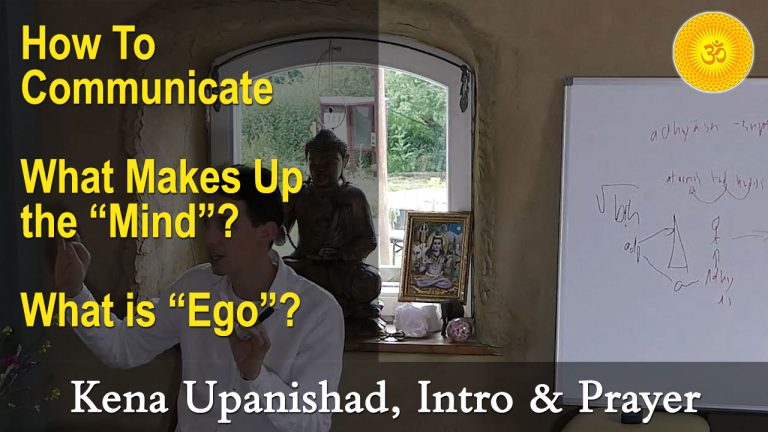
This class talks about various Vedic concepts related to healthy living and self-realization. It begins with Vak (speech), emphasizing the importance of truthful, kind, and beneficial communication. The class discusses Prana (life force) and the need for a healthy relationship with food, suggesting mindful eating and gratitude. The senses are explored, particularly Shrotram (hearing) and Cakshu (sight), emphasizing their proper use and the role of discernment. The mind's four functions are detailed: Manas (emotions), focusing on appropriate responses to situations; Sankalpa-Vikalpa (decision-making), highlighting the importance of finding nuanced solutions; Buddhi (intellect), emphasizing the development of cognitive capacity and logical thinking; and Cittam (memory), stressing its role in connecting ideas and solving problems. The concept of Samatvam (equanimity) is explained as a balanced emotional state aligned with reality, achieved by changing mental narratives rather than controlling emotions. Ahankara (I-sense) is discussed as a faculty for self-preservation that can be subject to distortion, emphasizing the need for a healthy I-sense that acknowledges interconnectedness. The class delves into the concept of Brahman (the limitless) and its relationship to the individual self, stressing the importance of pursuing knowledge of Brahman and seeking grace. The purpose of prayer is explained as a means to influence unknown variables in one's spiritual journey. Finally, the class outlines three types of obstacles in spiritual progress: Adhyatmika (personal biases and physical limitations), Adhibhautika (environmental and social challenges), and Adhidaivika (cosmic forces beyond individual control). Throughout, the class emphasizes maintaining a balanced approach to life experiences while pursuing moksha (liberation) and the importance of aligning one's actions and understanding with Vedantic teachings.